
Food & Beverage Production Facilities
Food & Beverage Anti-Slip Solutions for Grating, Grated Stairs & Walkways
Hygienic, high-traction retrofits—no drilling, no welding, no downtime.
Water, syrups, sugars, and constant wash-downs make food and beverage facilities uniquely prone to slips—and traditional fiberglass nosing can chip, delaminate, and trap residue.
Titan Safety Anti-Slip Clips retrofit onto steel grating and grated stair treads with no hot work and deliver durable, easy-to-sanitize traction that supports food-safety compliance.
Why Food & Beverage Facilities Choose Titan
- Hygienic design: Non-porous, corrosion-resistant metal with sealed edges—minimizes crevices where sugars and biofilms accumulate; cleans fast under CIP and high-pressure wash-downs.
- No debris risk: Unlike fiberglass, clips don’t flake or delaminate—reducing foreign-material contamination risks under FDA/USDA GMP expectations.
- Wet-condition grip: High-friction surface maintains footing when floors and steps are wet or condensating.
- High visibility: Bright, defined step edges improve hazard recognition around packaging, bottling, batching, and cold storage.
- Long service life: Resists chemicals, humidity, and UV; 10+ years typical service with minimal maintenance.
- Zero-hot-work install: No drilling/welding—fewer permits, less disruption, and faster upgrades.
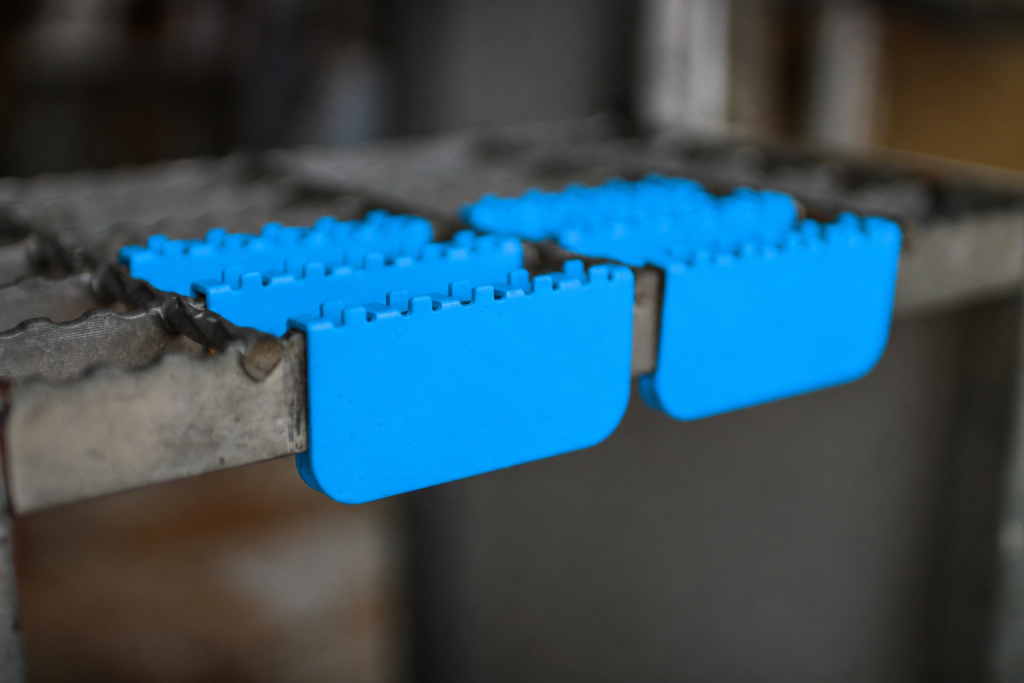
New Product!
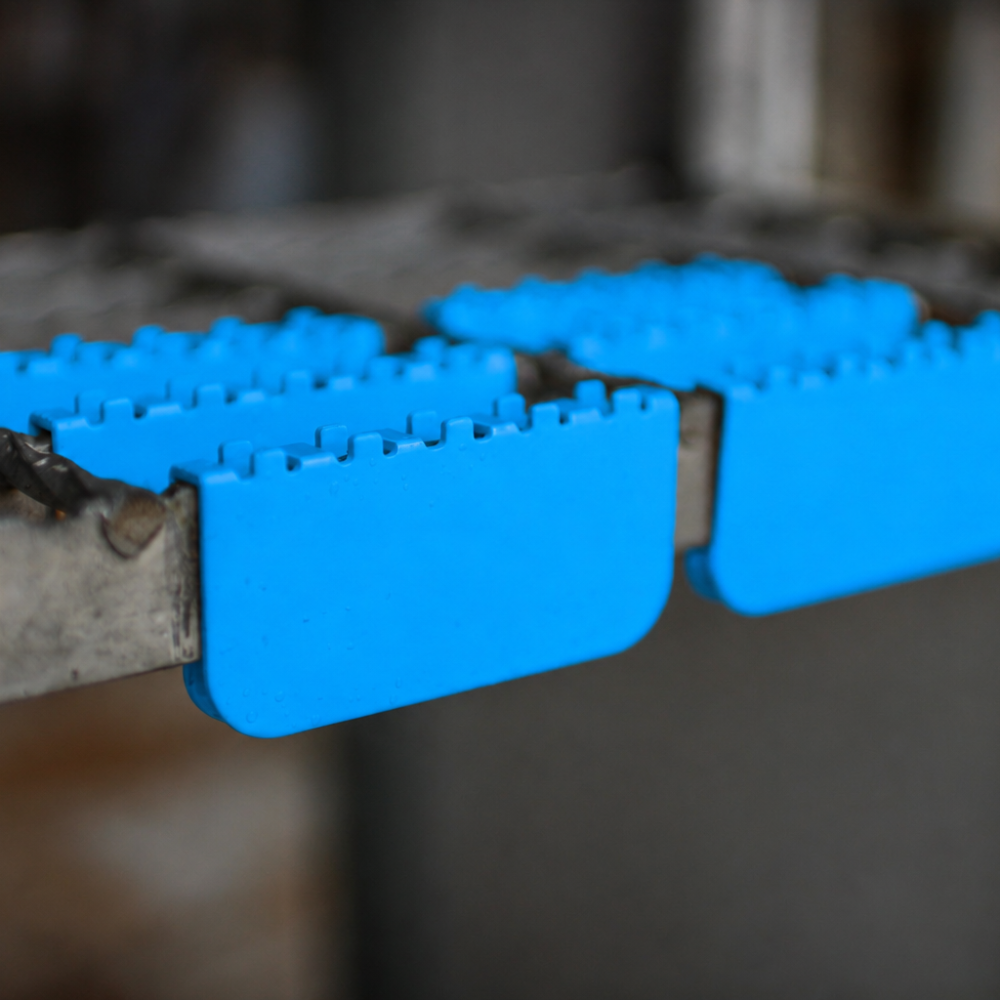
Now available in Blue with anti-microbial powder coating designed specifically for Food and Beverage facilities.




Quick Case Snapshot
Beverage Production Site — Munster, Indiana (PepsiCo)
“Really love this product! Has helped keep people from slipping on our steps, especially when wet. They are very tough, but do not dig too much into your shoes.”
Trusted By


Uses in Food & Beverage Facilities
- Grated stairs and landings across processing and packaging halls
- Bottling/canning lines, depalletizers, and pack-out areas
- Syrup rooms, mixers, batching platforms, and ingredient handling
- Cold rooms, freezers, and dock approaches (condensation)
- CIP/wash-down zones and sanitation corridors
- Mezzanines, catwalks, and elevated maintenance access
Fit & Coverage Guidelines (Typical)
Open grating: Select clip size by bar depth; place clips at heel-strike points (front edges and mid-span).
Stairs: 6 – 12 clips per step (width-dependent) for continuous leading-edge traction.
Landings/platforms: Grid pattern in traffic lanes; tighten spacing at turns and door thresholds.
(N.B. – Download and read the clip install guide for best application and result)
Need help sizing?
Share step width, bars-per-tread (depth), and number of treads/landings—we’ll map an exact bill of materials.
Installation—3 Simple Steps
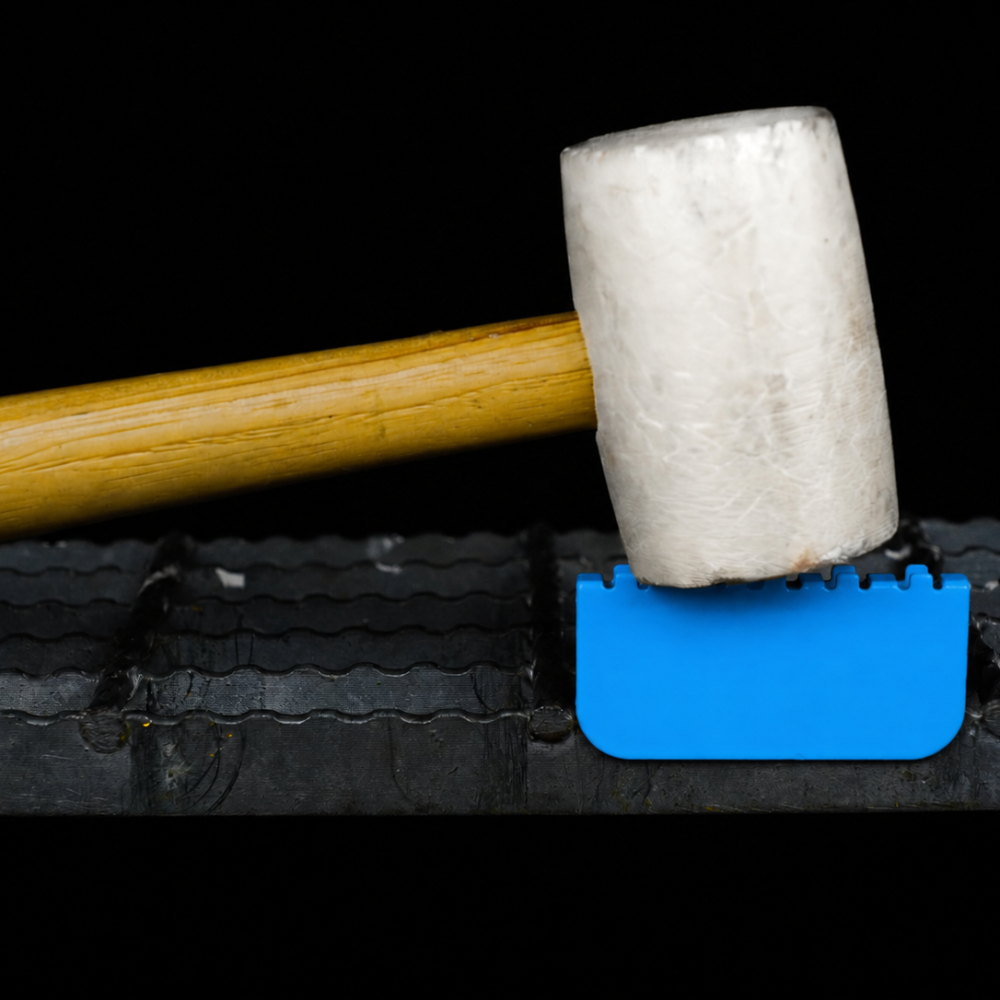
Position the clip on the bar(s).
Knock into place with rubber mallet.
Verify traction under foot; repeat the pattern.
Most teams handle installs with standard PPE and basic hand tools—no hot permits.
Maintenance & Life
Include a quick visual check in sanitation rounds. Replace single clips if damaged; neighboring hardware stays undisturbed. Typical service life exceeds 10 years in wash-down duty.
Results You Can Expect
Fewer STF incidents in wet/high-traffic areas
Faster, more effective sanitation with less chemical/time
Reduced foreign-material risk versus fiberglass nosing
Lower permitting/admin burden (no hot work)
Rapid scale-out from pilot line to plant-wide standard
Key Points
- Hygiene-forward (non-porous, sealed edges)
- No flaking (helps mitigate FM contamination risk)
- Standardizable (document spacing once; repeat site-wide)
Ready to make wet areas safer—and easier to clean?
Get a food and beverage facility-specific sizing check and quote.
FAQs
Will the clips withstand daily hot-water and chemical wash-downs?
Yes. The non-porous metal construction and durable traction surface are designed for high-pressure, hot-water, and chemical sanitation routines typical in beverage and food processing.
Do the clips chip, peel, or shed debris like fiberglass nosings can?
No. They’re metal—not fiberglass—so there’s no surface flaking or edge delamination, helping mitigate foreign-material contamination risks in GMP environments.
Are they compatible with CIP (Clean-in-Place) workflows?
Yes. Smooth, sealed edges minimize crevices and clean quickly with standard CIP and foam/caustic/rinse steps. Specify spacing so sanitation wands can pass freely.
What about sugar syrups and sticky residues—will they trap under the clip?
Correct sizing and sealed edges minimize residue traps. During install we recommend a lane/leading-edge pattern that preserves access for spray angles and floor drainage.
How many clips per stair tread do we need?
Most food & beverage stairs use 6–12 clips per step depending on width and traffic. Share step width and bars-per-tread and we’ll map exact coverage.