
Cement Plants and production facilities
Cement Plant Safety Solutions for Grating, Stairs & Walkways
High-traction, fast-install anti-slip clips that cut incidents – not uptime.
Cement plants run hot, dusty, and relentlessly. Wet slurry, fine dust, and worn grating turn accessways into slip hazards – yet shutting down production to “fix safety” is rarely an option.
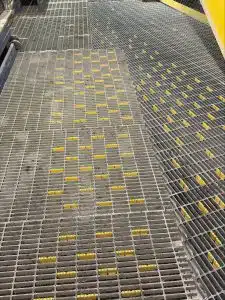
Titan Safety Anti-Slip Clips deliver instant traction on grating, stairs, and platforms in minutes per step – no hot work, no specialised tools, and no shutdown required.
Why Cement Facilities Choose Titan
- No downtime installs: Tool-less, hot-work-free fitting lets you upgrade safety during normal operations.
- Immediate traction: Aggressive, high-grip profile bites into work boots - dry, wet, or dusty.
- Rugged & field-serviceable: Built for heavy traffic and harsh cement environments.
- Lower cost than replacement: Retrofit existing steel grating without capex-heavy changeouts.
- Standardized, repeatable: Fit pads by step count and bar depth for consistent coverage.
Products In Use



Quick Case Snapshots
Trusted By


Uses in Cement Plants/Mills
- Kiln, cooler, and raw mill accessways
- Baghouse and filter platforms
- Stairways, landings, and mezzanines
- Maintenance catwalks and inspection routes
- Loadout, packing, and palletizing areas
- Outdoor transfer points exposed to rain and slurry
Fit & Coverage Guidelines (Typical)
Open grating: Select clip size by bar depth; place clips at heel-strike points (front edges and mid-span).
Stairs: 6 – 12 clips per step (width-dependent) for continuous leading-edge traction.
Landings/platforms: Grid pattern in traffic lanes; tighten spacing at turns and door thresholds.
(N.B. – Download and read the clip install guide for best application and result)
Need help sizing?
Share step width, bars-per-tread (depth), and number of treads/landings—we’ll map an exact bill of materials.
Installation—3 Simple Steps
Position the clip on the bar(s).
Knock into place with rubber mallet.
Verify traction under foot; repeat the pattern.
Most teams handle installs with standard PPE and basic hand tools—no hot permits.
Maintenance & Life
Periodic inspection during routine walkdowns. Replace single clips if damaged—no need to disturb adjacent panels.
Results You Can Expect
Fewer slips and near-misses on high-traffic routes
Lower lost-time incidents and comp exposure
Measurable savings versus grating replacement
A cleaner, more confident safety culture—without pausing production
Key Points
- No hot work: permits not required in most sites
- Non-invasive retrofit: keeps existing grating
- Scalable: pilot a staircase, then roll across plant
Ready to eliminate slip risks without downtime?
Get a sizing check and quote.
FAQs
Will the clips loosen on vibrating platforms?
They’re designed to lock onto bar profiles. For high-vibration areas, we’ll specify the optimal fastener style and spacing.
What about wet slurry and fine dust?
The high-traction profile maintains grip in wet and dusty conditions common to cement production.
How fast can we roll out across multiple lines?
Start with a pilot (e.g., one staircase and two platforms). Once spacing is set, teams can scale quickly line-by-line.